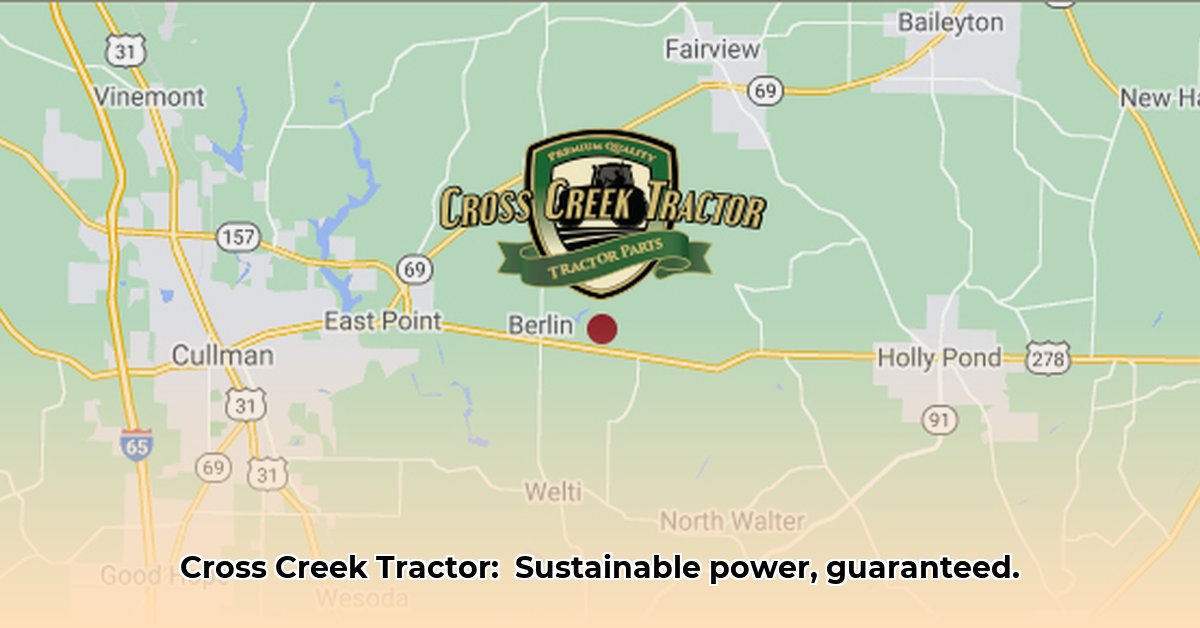
Finding reliable tractor parts is crucial for farmers. This article examines Cross Creek Tractor in Cullman, Alabama, focusing on its commitment to domestic sourcing, its sustainability efforts, and its impact on farmers. We analyze the benefits and drawbacks of their approach, considering cost, environmental impact, and warranty policies, ultimately evaluating their contribution to a more resilient and sustainable agricultural future. For more information on Dixie Tractor, visit their website: Dixie Tractor.
Domestic Sourcing and Supply Chain Resilience
Cross Creek Tractor emphasizes domestically sourced parts, offering several potential advantages. Shorter transportation distances translate to reduced fuel consumption and lower greenhouse gas emissions, contributing to a smaller carbon footprint. This also strengthens local economies by keeping dollars within the community. However, the exact percentage of domestically sourced parts remains undisclosed. This lack of transparency hinders a complete assessment of their supply chain resilience and sustainability claims. Further data is needed to fully quantify the benefits.
Do domestically sourced parts consistently mean lower costs for farmers? While reduced transportation might offset some expenses, the upfront cost of parts could be higher, necessitating a comprehensive cost-benefit analysis. This analysis should also consider the impact of any potential part shortages or delays caused by relying solely on domestic suppliers.
Sustainability Considerations: Environmental Impact
The assertion that "domestic" equals "eco-friendly" needs careful scrutiny. Domestic production still involves energy consumption, waste generation, and transportation, albeit potentially over shorter distances. A comprehensive lifecycle assessment (LCA) – evaluating the environmental impact from raw material extraction to disposal – is vital for a truly accurate comparison with imported parts. Currently, Cross Creek Tractor's LCA data is unavailable, limiting a complete assessment of their environmental performance. This lack of data prevents a definitive conclusion on whether their approach is genuinely more sustainable than importing parts.
Cost-Benefit Analysis: Balancing Price and Reliability
The cost implications of domestic versus imported parts are complex. Higher upfront costs for domestically sourced parts might be offset by reduced downtime and increased equipment reliability. However, the accessibility and availability of these parts are equally crucial. Supply chain disruptions or part shortages could negate any cost savings, resulting in significant repair costs and delays. A farmer’s choice will depend on a careful consideration of their budget, operational needs, and risk tolerance.
Warranty and Return Policies: Protecting Farmer Investments
Clear and comprehensive warranty and return policies are critical for farmer confidence. While Cross Creek Tractor offers warranties, vagueness regarding restrictions necessitates detailed clarification. Farmers need transparent information on coverage, exclusions, and claim procedures to assess the true value of these policies. Similarly, a transparent return policy for faulty parts is essential to minimize disruptions and costs.
Comparison with Competitors: A Market Perspective
Comparing Cross Creek Tractor's practices to those of its competitors would provide valuable context. This analysis should include sourcing strategies, pricing structures, and environmental commitments. This comparative assessment allows farmers to make informed choices based on their individual priorities (e.g., price, reliability, sustainability). Access to this comparative information empowers farmers to choose the supplier best suited to their specific needs.
Conclusion: Transparency and Future Research
Cross Creek Tractor's commitment to domestic sourcing shows promise for strengthening supply chain resilience and supporting local economies. However, greater transparency is essential. Providing data on the percentage of domestically sourced parts, conducting and publishing a comprehensive LCA, and offering detailed warranty and return policy information will significantly enhance their credibility and allow for a more complete evaluation of their sustainability claims. Further research, including comparative lifecycle assessments, is crucial for a broader understanding of the environmental impact of different sourcing strategies within the agricultural sector. This increased transparency will benefit Cross Creek Tractor and the industry as a whole, paving the way for a more sustainable future in agriculture.